Barndominium Builders in Randolph County, NC
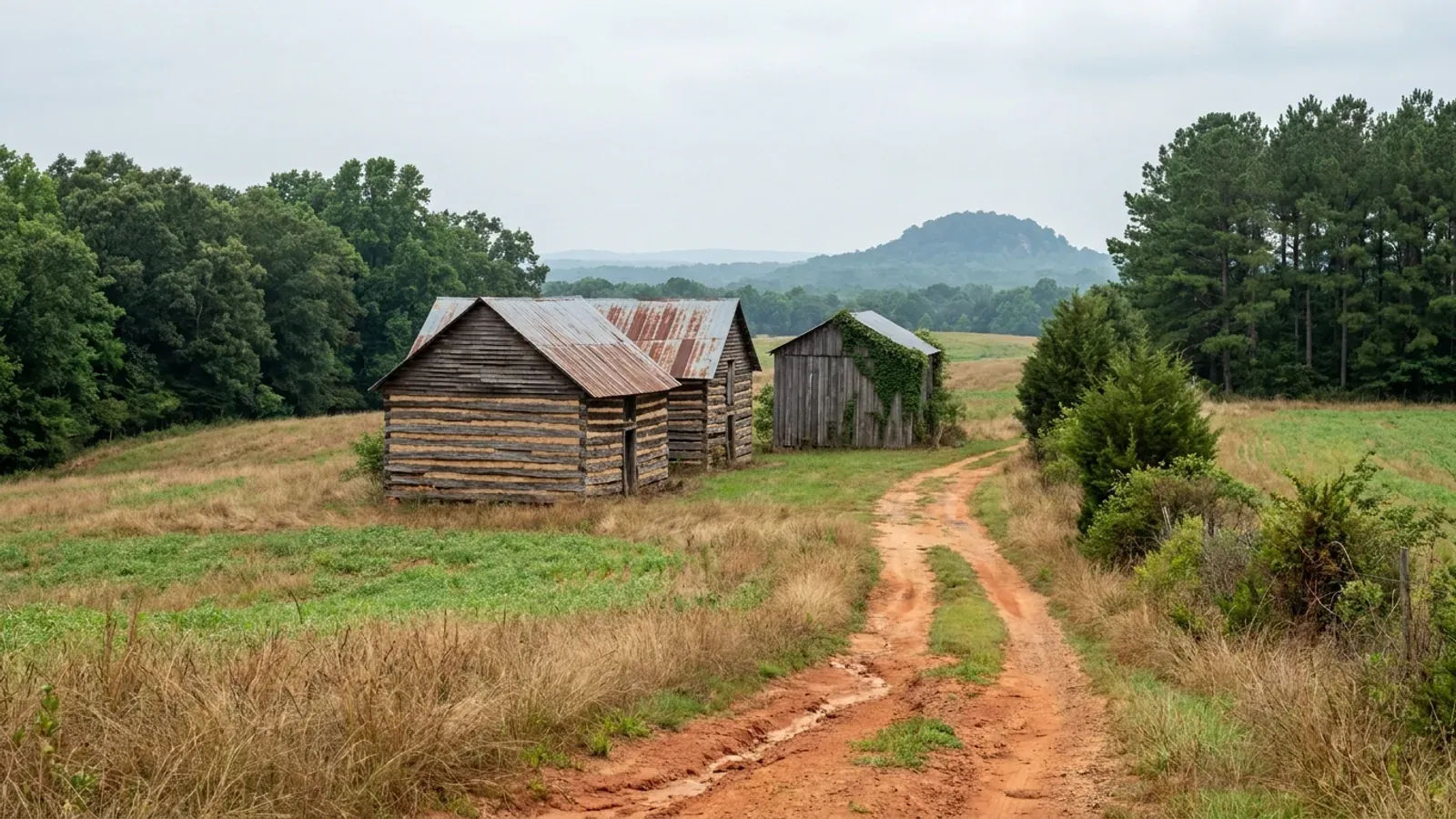
Randolph County is the Triad's land county, and the numbers say so plainly: 1,238 farms — more than any other county in North Carolina — across 131,301 acres, 26.2 percent of its area, at a median farm size of 49 acres, spread over 782 square miles at 191 people to the square mile. Asheboro is the seat, Archdale and Trinity sit under High Point on the northern edge, and Liberty, Ramseur, Randleman, Franklinville, Seagrove and Staley are strung across the rest. A Greensboro or High Point buyer who wants acreage usually ends up here. Two things about building in Randolph are genuinely different from the counties around it, and both are checkable. The first is the permit fee: Randolph does not measure your building at all. Its schedule computes construction value from the International Code Council Building Valuation Data and charges $60 up to $20,000 of that value and $3.00 per thousand above it — a third basis entirely, alongside Guilford's heated-square-foot rule to the north and Alamance's gross-area-under-roof rule to the east. The second is the ground. Randolph sits across the Carolina slate belt, and the USDA's own soil survey of the county maps Georgeville soils over 49 percent of it and the Badin-Tarrus group over another 23 percent, against just 8 percent for the Vance-Cecil-Appling group. Cecil — the state soil, the red clay everyone pictures when they picture the Piedmont — is a minor soil here. Badin carries weathered bedrock at 20 to 40 inches, where Cecil's runs past 60. That changes what a footing trench and a septic drainfield find when they go down, and it is worth knowing before you make an offer.
Randolph County at a glance
- County
- Randolph County
- City rules outside city limits
- Randolph County's own ordinance limits municipal reach: no city may extend its extraterritorial powers more than one mile past its corporate limits without the approval of the Randolph County Board of Commissioners.
- Population
- 149,516
- ZIP codes
- 27203, 27205, 27248, 27263, 27298, 27316, 27317, 27341, 27370
- Site visits
- Same week across Asheboro, Archdale, Liberty and the rural county
Building conditions in Randolph County
The building code does not change at a county line here. Under § 143-138(e) the North Carolina State Building Code applies throughout the state, and a city or county may adopt only a fire prevention code and floodplain regulations of its own — there is no general local amendment power, so there are no county amendments to look up. The edition in force is still the 2018 NC Residential Code, effective 1 January 2019; the 2024 edition has been delayed three times and carries no effective date at all. What genuinely differs is who issues the permit and inspects the work, what that office charges, how the parcel is zoned, what the local floodplain ordinance requires of the foundation — and two design numbers the code publishes county by county, the ultimate design wind speed and the seismic design category. The rest of Table R301.2 is set once for everyone: a flat 20 psf roof live load, a 12-inch frost line, Moderate weathering, and termite protection required everywhere in the state with no exemption. There is no ground snow load column in the residential code at all.
Randolph County Permit Fee Schedule, approved by the Board of County Commissioners, Effective Date July 1, 2026, randolphcountync.gov, read 6 September 2026; Guilford County Inspections Department fee panels, guilfordcountync.gov; Alamance County Permits and Inspection Fees 2025-2026, inspections.alamancecountync.gov.
USDA Natural Resources Conservation Service, Soil Survey of Randolph County, North Carolina (2006), General Soil Map Units 1–6, full text read 6 September 2026.
USDA NRCS Soil Survey of Randolph County, North Carolina (2006); USDA Official Series Descriptions for BADIN and CECIL, soilseries.sc.egov.usda.gov, read 6 September 2026; 15A NCAC 18E .0502 and .0505, NC Office of Administrative Hearings.
Randolph County Unified Development Ordinance, Article 600, Table 12: RA Residential Agricultural District, adopted 15 July 2021, randolphcountync.gov, read 6 September 2026; N.C.G.S. § 160D-903(b).
Randolph County Permit Fee Schedule, Effective Date July 1, 2026, Building / Electrical / Plumbing / Heating & Air-Conditioning sections, randolphcountync.gov, read 6 September 2026.
USDA NASS 2022 Census of Agriculture, county profiles; U.S. Census Bureau Vintage 2025 county population estimates and 2025 Gazetteer county file.
Also worth knowing before you build in Randolph County
- The northern county carries the shrink-swell soils, and the tell is colour
- Randolph's third general soil map unit, Mecklenburg-Wynott-Enon, covers 13 percent of the county and sits mainly in its northern part. The survey states these soils formed from mafic rocks — Mecklenburg and Wynott from mafic intrusive rocks, Enon from diabase — and records random areas of Wynott, Enon and Mecklenburg soils with very slow permeability and a high shrink-swell potential. That is the opposite of the county's slate-belt and Cecil soils, which the USDA classes kaolinitic with low shrink-swell. North Carolina's genuinely expansive Piedmont soil is not the famous red clay; it is the dark mafic-derived group nobody warns about, and the standing advice is worth repeating on a Randolph lot in particular: if the topsoil is dark grey-brown rather than red, ask about shrink-swell before the foundation is designed.
- The Randleman Lake buffer lives inside the county's own ordinance
- Randolph County did not leave the Randleman Lake riparian buffer to the state. Section 826 of its Unified Development Ordinance reproduces the management strategy under 15A NCAC 02B .0724 and applies it to landowners and other persons — including Randolph County itself and State and federal entities — conducting activities within the regulated buffers in the Randleman Lake watershed, in the Deep River headwaters on the county's northern side. The rule protects a surface water where the feature is approximately shown on the USGS National Map or where there is other site-specific evidence of its presence. Like North Carolina's other four programmes it is 50 feet in two zones: 30 feet of undisturbed vegetation, then 20 more. Note the citation trap if you go looking for older material — the Randleman provisions were renumbered out of 02B .0250 into .0724 effective 15 June 2020.
- Liberty has a battery plant, and it is worth stating carefully
- Toyota's battery plant sits on an 1,800-acre site at Liberty, in eastern Randolph County. Reporting from WUNC dated 13 November 2025 puts the investment at $14 billion, records that the plant had hired more than 1,200 employees by its opening ceremony against an eventual target of roughly 5,000, and states that four of an eventual fourteen production lines were running. That is a real employer with real payroll in a county of 149,516 people, and it is the reason Liberty and Staley are being looked at by buyers who were not looking at them five years ago. It is also a single private investment, and the honest framing for a land purchase is that the permit rules, the soil result and the road frontage decide whether your parcel works — not who is hiring nearby.
- The design numbers, and what they are not
- Randolph County is unlisted in Table R301.2(4) of the 2018 NC Residential Code, so it takes that table's default of 115 mph ultimate design wind speed. It is absent from Table R301.2(7), the Seismic Design Category C list, whose own note places every county not listed in Category A or B. It is in IECC climate zone 3A under Table N1101.7. Three figures do not vary anywhere in the state and are worth having on the drawing: a flat 20 psf roof live load, a 12-inch frost line depth, and termite protection required in all of North Carolina at a Moderate-Heavy severity under Section R318. There is no ground snow load column in the code at all — Section R301.2.3 is deleted — so any snow figure quoted for this county came from somewhere other than the code. Name the edition on the drawings: the 2018 code is in force and the 2024 edition, though adopted, has no effective date.
- Septic comes before the building permit, and the county doubles the field
- Randolph County Public Health runs the on-site wastewater programme separately from the Inspections Department, and 15A NCAC 18E .0201(c) is the rule that sets the order: upon issuance of the Construction Authorization the applicant may obtain a building permit. Improvement Permit first, then Construction Authorization, then the building permit, then an Operation Permit once the system is inspected before it is covered. The site is judged on soil morphology rather than a percolation test — the word percolation does not appear anywhere in 18E — and under .0509(a) a site is suitable or unsuitable with no middle category. The acreage question follows from .0508(b): a site is unsuitable unless it can hold both the initial drainfield and a repair area, so the area the soil result gives you is effectively doubled. On a Randolph slate-belt ridge, where soil depth is the parameter most likely to be tight, that is the number that decides how big your lot really needs to be.
USDA NRCS Soil Survey of Randolph County, North Carolina (2006), General Soil Map Unit 3 and Unit 5 inclusions; USDA Official Series Descriptions for CECIL and IREDELL, soilseries.sc.egov.usda.gov, read 6 September 2026.
Randolph County Unified Development Ordinance, Article 800 Section 826 "Randleman Lake Watershed Riparian Buffers", randolphcountync.gov, read 6 September 2026; 15A NCAC 02B .0724, NC Office of Administrative Hearings.
WUNC, "With a glitzy celebration, Toyota inaugurates its massive $14 billion Randolph County battery plant", 13 November 2025, wunc.org, read 6 September 2026.
2018 NC Residential Code, Tables R301.2(1), R301.2(4), R301.2(7) and N1101.7 and Sections R301.2.3 and R318, NC Office of the State Fire Marshal.
15A NCAC 18E .0201, .0501, .0505, .0508 and .0509, NC Office of Administrative Hearings; Randolph County Public Health, Environmental Health division.
The expensive surprises are in the ground, not the building
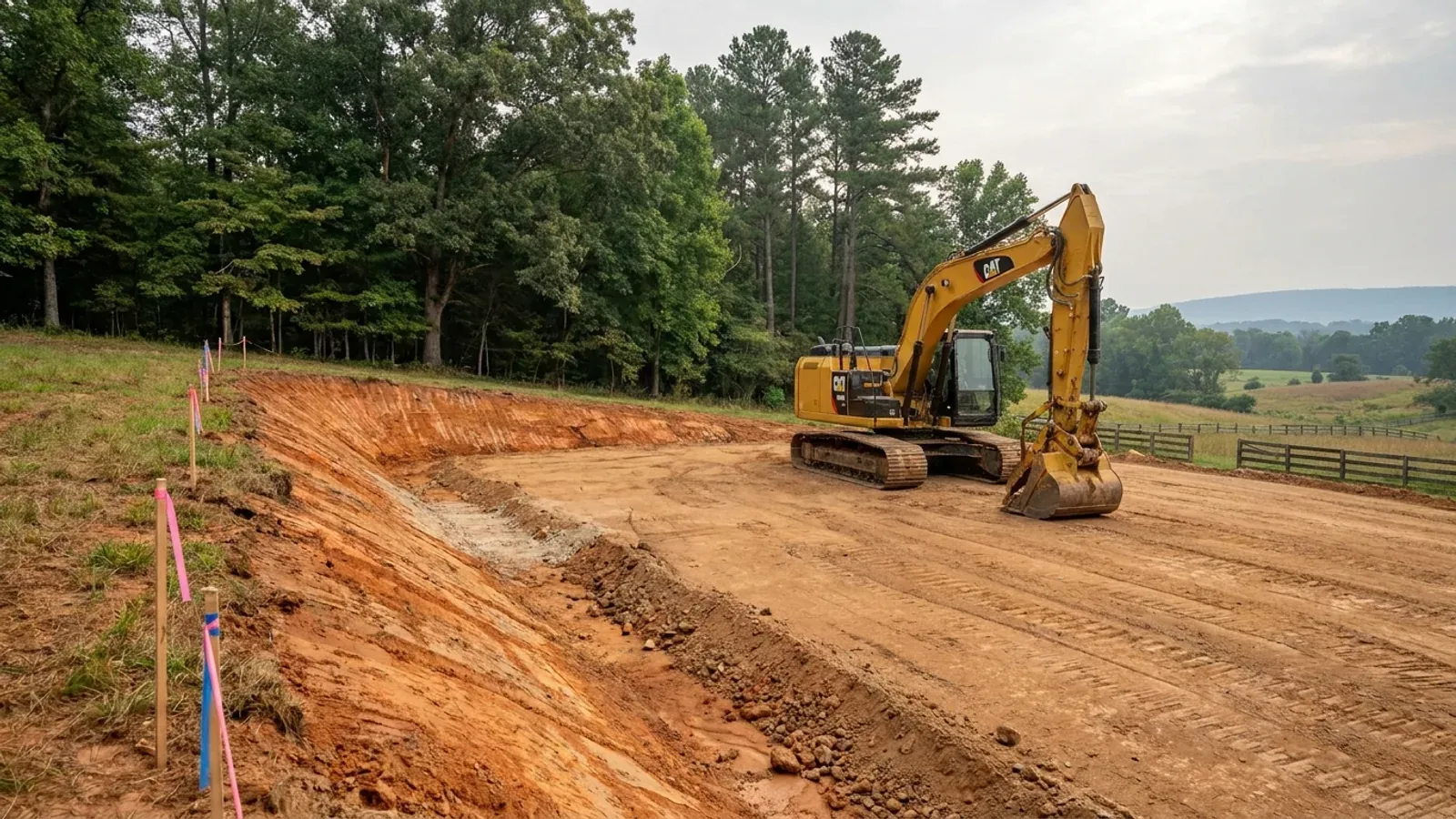
What moves a North Carolina budget is usually below grade, and the thing most often got wrong is which clay to worry about. Cecil — the red Piedmont clay everyone pictures, and the state soil — is kaolinitic and low shrink-swell; it does not heave. The soil that does is Iredell, formed over diabase and gabbro, which the USDA describes as vertic, very high shrink-swell, with a perched water table a foot or two down from December through April. The tell is colour: Cecil is red and Iredell is dark grey-brown, and they sit within a few miles of each other across the central Piedmont. West of that the question stops being clay and becomes slope, rock and colluvium; east of the fall line it becomes water, and in the Tidewater it becomes organic soil that subsides irreversibly once it is drained. Then the same ground decides the septic system, and North Carolina rewrote those rules recently enough that most of what is published about them is out of date. 15A NCAC 18E replaced the old subchapter on 1 January 2024 and was amended again on 1 June 2026: the site is classified on soil morphology — the word "percolation" does not appear anywhere in it — and there is no "provisionally suitable" any more, only suitable or unsuitable, on a single failed parameter. There is no statewide minimum lot size either; the area you need is derived from the soil result and then doubled, because a site that cannot fit both the initial field and its repair area is unsuitable. And the order matters more than people expect: the county health department's Improvement Permit and Construction Authorization come first, and the building permit is available on the strength of the Construction Authorization, not before it. One more thing that catches people: disturb more than an acre and you need an approved erosion and sedimentation control plan in hand before work starts, with penalties up to $5,000 a day, and a pad plus a drive plus a drainfield plus a laydown area crosses an acre faster than it sounds. So the site work, the foundation and the drainfield get resolved together rather than one at a time. We price the dirt before we price the building.
What we build in Randolph County
All nine services are available in Randolph County. What a build costs depends far more on the parcel than on square footage, so we price against your land rather than publishing a rate card.
Barndominium Kits
Engineered shell packages drawn to your own county's wind and seismic numbers under the 2018 NC Residential Code, with the exclusions written down.
Custom Plans
Barndominium floor plans drawn for your parcel, your county's design figures and the septic system your bedroom count will actually need.
Metal Homes
Metal building homes finished to live in — envelope, insulation, condensation control and interior finish specified to your NC county's climate zone.
What a build looks like
Three stages every Randolph County project passes through, from a raw parcel to a finished home. Site work first, because that is where the budget is decided.
The parcel
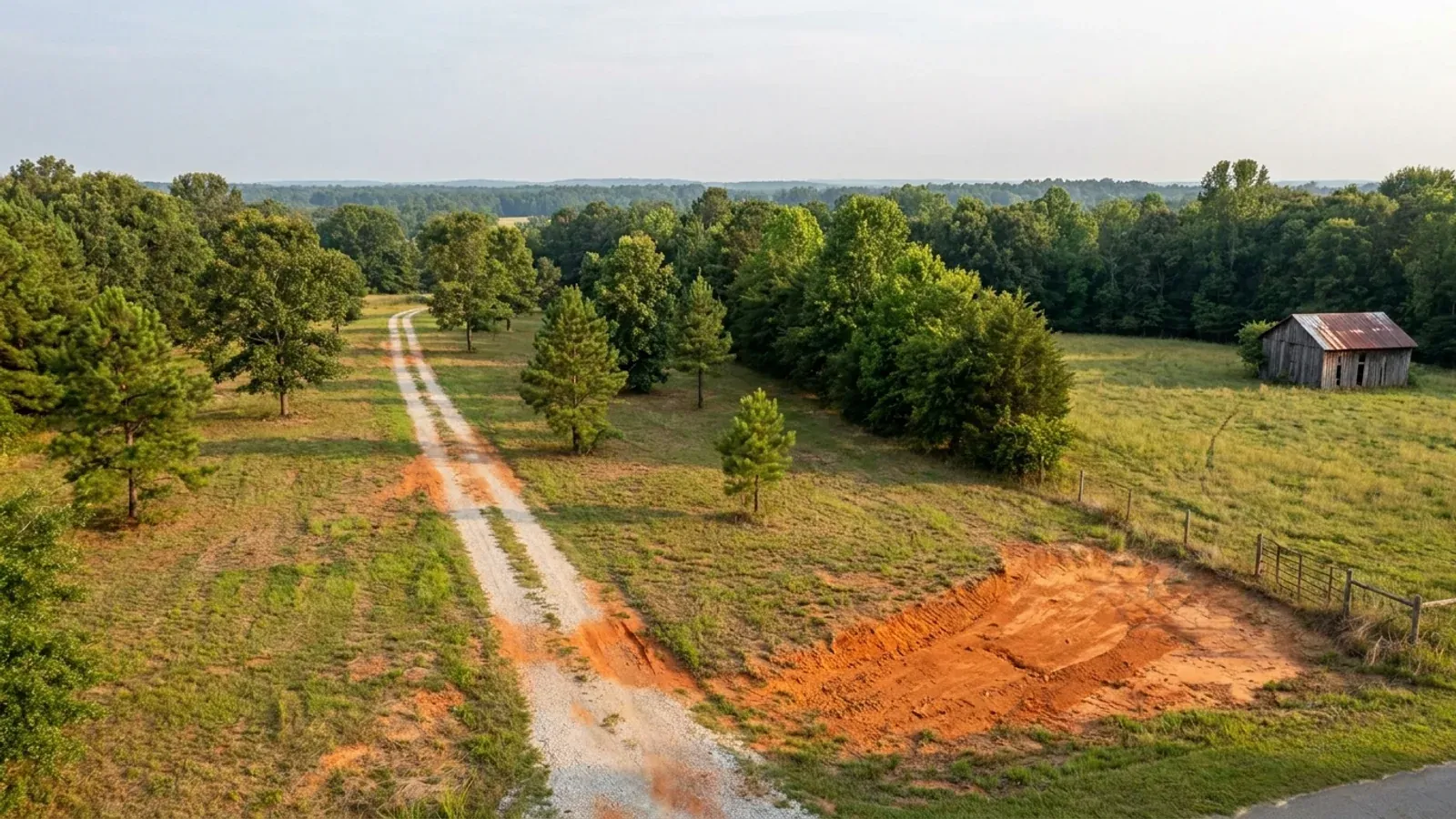
Zoning, setbacks, flood zone and utility access get checked before anything is drawn.
Pad and permit
Clearing, grading and a compacted pad, while the septic authorization and the building submittal work through whichever offices cover your parcel.
Frame to finish
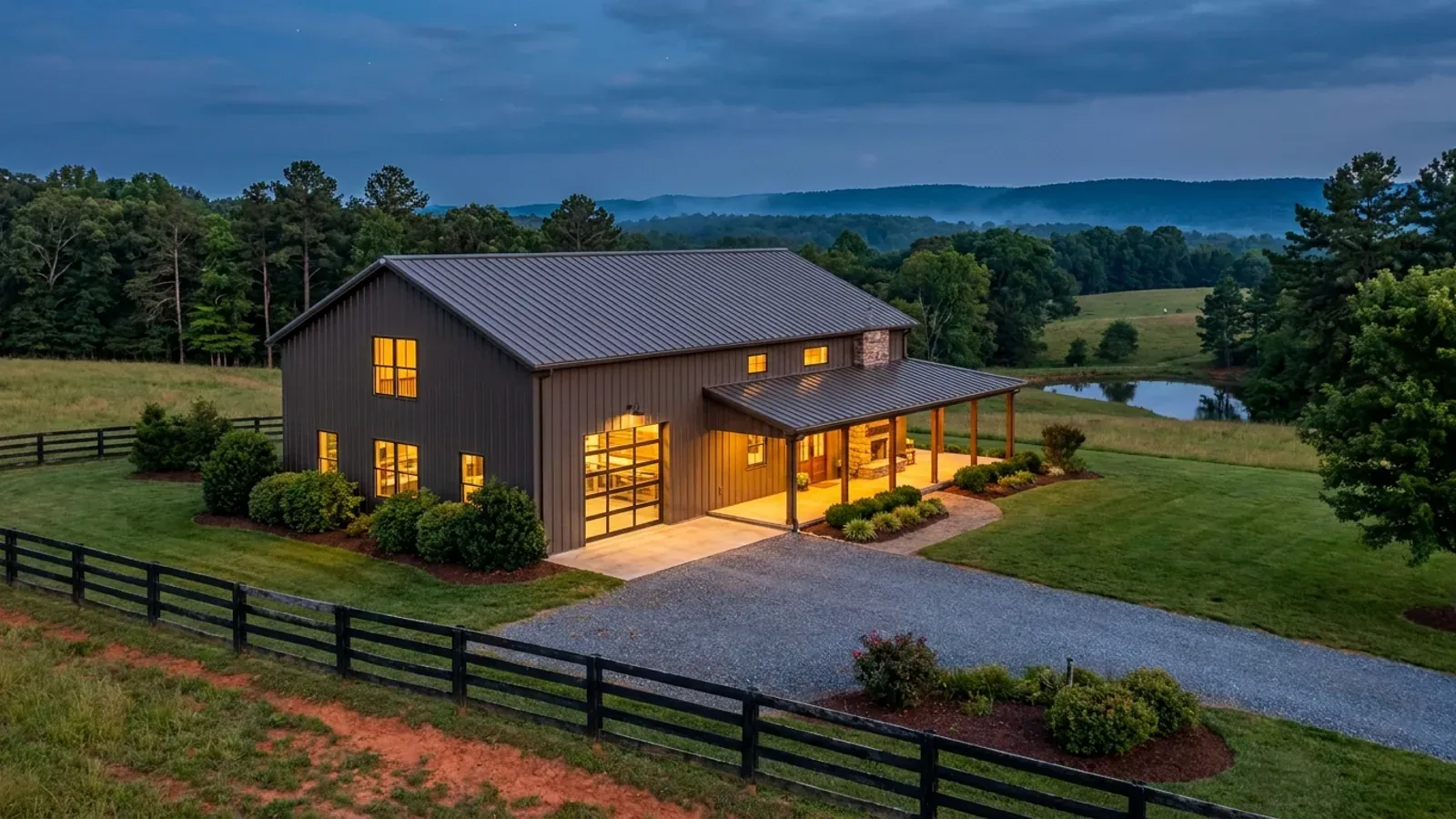
Shell erected and dried in, then systems, insulation and interior finish through to CO.
Those are the rules where you are building in Randolph County. Tell us what you want to build and we will draw it to them.
Where we build around Randolph County
Randolph County and the rural land around it. The buildable acreage for a project this size usually sits outside the town limits — which does not automatically put it under the county, because a town's zoning and building-code enforcement reach one to three miles past its limits into its extraterritorial jurisdiction. Inside the limits, in the ETJ, or in neither are three different answers to who issues your permit.
Keep reading
The questions that usually come next once you know what Randolph County allows.
Barndominium Cost Guide
What the named, dated sources actually publish for North Carolina, with a calculator built on the same figures.
Read itIs It Legal in North Carolina?
Why a "farm building" is defined as nonresidential, and the ten-acre right § 160D-903(b) gives you in exchange for building to the code.
Read itHow Long Does It Take?
Census build-duration data, and what actually sets the permit clock where you are building.
Read itNearby areas we build in
Others we cover nearby. Every North Carolina municipality sits inside a county — there are no independent cities here — but that does not settle who regulates a given parcel. A town's zoning, subdivision rules and building-code enforcement extend one to three miles beyond its limits, by population, into what the statute calls its extraterritorial jurisdiction; town taxes and town elections do not follow. So the office that issues the permit, what it charges and how the land is zoned can all differ from one card to the next, and the mailing address will not tell you which case you are in.
Building in Randolph County: common questions
8 questions we get asked most often about building in Randolph County. If yours is not on the list, ask it directly.
How does Randolph County calculate the building permit fee?
What does the Carolina slate belt mean for my foundation and my septic field?
Who issues my permit — Randolph County or my town?
How much land do I need in the RA district?
What are Randolph County's design numbers?
Is the Liberty battery plant a reason to buy land in Randolph?
Do I need to check Randolph County's own building-code amendments?
Do I need an erosion and sedimentation control plan?
Building in Randolph County?
Start with the plan. Tell us what you want to build and we will draw it, then confirm which office issues the permit for your parcel, what it will let you put there, and what wind load it has to meet. That conversation costs nothing.